

Setting the foundations for enjoyable meal times
We all want to do our best as parents. We want to see our children thrive and be healthy. There’s often immense pressure to get things right and to practice healthy living ourselves. This can make it hard for us to be responsive, supportive parents. After all, what do you do when your kids are constantly refusing meals, clinging to their preferred foods, having melt downs at the dinner table, or only wanting sweets? All this pressure can make meal times a stressful event.
A judgement free zone.
Firstly, there is no judgement. Raising kids is, without a doubt, a tough gig. And feeding kids in today’s world can feel so confusing and overwhelming. It can be easy for us to respond to the challenge of feeding our children with either avoidance or excessive pressure. For many people, it is hard to deal with the constant complaints and rejection of food, so they turn to only providing what their children like. Frustration can lead others to pressure their children into finishing the plate or trying new foods. If you’ve leaned on one of these strategies, it’s understandable. That’s how many of us were raised to relate to food. Remember, though: this is a judgment-free space; we’re all doing the best we can. Yet what if there is a middle-ground – another option?
How can I help you with meal times?
This is where I come in. You may have found a whole catalogue of healthy recipes, bought delicious snacks, packed amazing lunch boxes, and yet you’re still not seeing results. Or maybe you’re just feeling worried or anxious about your child’s food intake. Will they always or only ask for white bread? Are they going to refuse yet another carefully prepared meal? I hear you and I see you. Having four kids, I can relate! I want to reduce your stress by giving you some principles and strategies to help you support your children on their food journeys.
Before you dive in, please remember that this is general advice. Although these principles can be applied in many circumstances, the way they are applied or the specific strategies used will look different for each child and family. Think of them like you would tools in a toolbox. If you’d like tailored support, I would encourage you to see a dietitian.
Developing empathy for your children’s food journey
From a place of empathy, we are better able to pivot towards understanding and compassion, thereby meeting our children’s needs. It’s hard work feeding children: refusals, complaints, constant (and conflicting) demands, incessant menu planning, meal preparation, hoping that you are getting it right, and yet worrying that you may be getting it wrong. And then there are the insistent demands emanating from social media, friends, family, and school, all urging our children to be eating healthy, balanced diets. In this pressure pot, we can feel stuck and overwhelmed, uncertain as to how we should support our children in expanding their food intake. Oftentimes, we can pass that pressure onto our children without realising it. Can you relate?
Pressing pause to reflect
If as parents we can pause, reflect, and place ourselves in our kids’ shoes, we might be able to gain some perspective, while drawing energy from that compassion to keep doing the best we can.
Perhaps a good place to start is reflecting on your own childhood and what mealtimes, lunch boxes, and food experiences like. Do you remember how it felt to try new foods as a child? Maybe you can remember sitting at the dinner table and having an unfamiliar or disliked meal presented. What was your reaction? How did you respond as a child?
I remember feeling anxious when faced with a new food, partly because I couldn’t tolerate the thoughts of having certain flavours and textures in my mouth. In fact, I would come up with many creative ways of getting around disliked foods and meals. I recall asking my mum “What’s for dinner?” as soon as she picked me up from school. If I didn’t like what was on offer, I’d plan on eating more at afternoon tea. The pressure to eat certain foods never helped me to enjoy them. Instead, it simply deepened my reluctance to experiment and explore.
Remembering the good, the bad – and possibly the ugly – moments of your childhood experiences with food may help you consider things from your children’s perspective. It may also help you reflect on what you want to keep doing, change, or stop with mealtimes.
Thinking about the why
Now, feeding kids can provoke a whole litany of frustrations. One of the most common is when kids start refusing their favourite foods for no apparent reason: one day they love a particular meal, and the next they angrily declare, “this is the worst meal ever!” In these moments, we can feel confused, annoyed, and disappointed; apart from anything else, we may simply want our kids to eat the meal! How can we even reconcile these wild swings in preference?
Stepping back and adopting a wider lens may help. For example, think about your own food preferences. Do you always feel like eating certain fruits or vegetables? Do you “go off” your favourite meals because you’ve just had them one too many times? Perhaps this is what our kids are expressing when they reject a meal – yet unlike us, they don’t possess the emotional equipment to compromise or be flexible.
Even as adults, food preferences may be influenced my numerous factors. They can shift with mood, weather, sickness, energy levels, company, and so on. It’s the same with our children: the time of day, mood, sleep, energy levels, developmental milestones, sickness, teething, connection with family members, food textures, methods of food preparation, the presence of mixed foods, noise levels at dinner, the day’s events – as you can see, the list is almost endless!
The need to validate our children’s experiences
Recognizing and remembering these things can be empowering and freeing. They equip us with a little more understanding and compassion, helping us accept our kids’ changing preferences and variations in food intake. Maybe we can even empathise with them: “I get it, I don’t always feel like pasta two nights in a row. It’s hard not having your favourite meal”. This sort of statement helps kids feel seen, understood, and builds connection as they realise you can relate to their experience. It can even foster trust that allows them to safely explore new foods.
We are all on a life long food journey.
Of course, we don’t necessarily have to reflect on our childhood to empathise with our kids. After all, we’re all on a lifelong journey with food. We continue to have moments of reluctance, try new cuisine, feel frustrated about eating left-overs, experience meals in different environments, or resort to comfort food during times of distress.
Empathy is your tool to help you loosen your grip on your expectations, worries or frustrations, and pivot towards understanding. From this place of compassion and we are more likely to accept our children’s own food journey and then provide the supportive, flexible environment they need.
Building connection
There is safety in connection
As with many parenting strategies, connection with our children is crucial. When connection is high, children feel safe and ready to explore the world around them. Empathy allows us to forge those bonds, which in turn creates safe and healthy environments our kids need to expand their zones of comfort and confidence.
Sharing food with our children
Are you one of those people who hates sharing food, only to be constantly asked by a toddler or young child, “Can I have a bite?” It’s so challenging! And yet, many young children are often introduced to new food by exploring what their parents are eating. This is because of there is safety in that kind of attachment: if mum is eating it, then it must be safe!
Sharing and imitation are common ways kids learn to eat new foods. I can’t tell you how many times I’ve made my lunch – say, a juicy salad sandwich, filled with all manner of goodies – only to have a child ask for bite after bite. Over time, they spontaneously started asking for the same food that I normally have. I didn’t pressure or ask them to eat the tomato or mushroom or cucumber. I didn’t even lightly suggest the idea. It was simply through a process of connection and shared experience that my kids developed the confidence to explore new foods and new tastes.
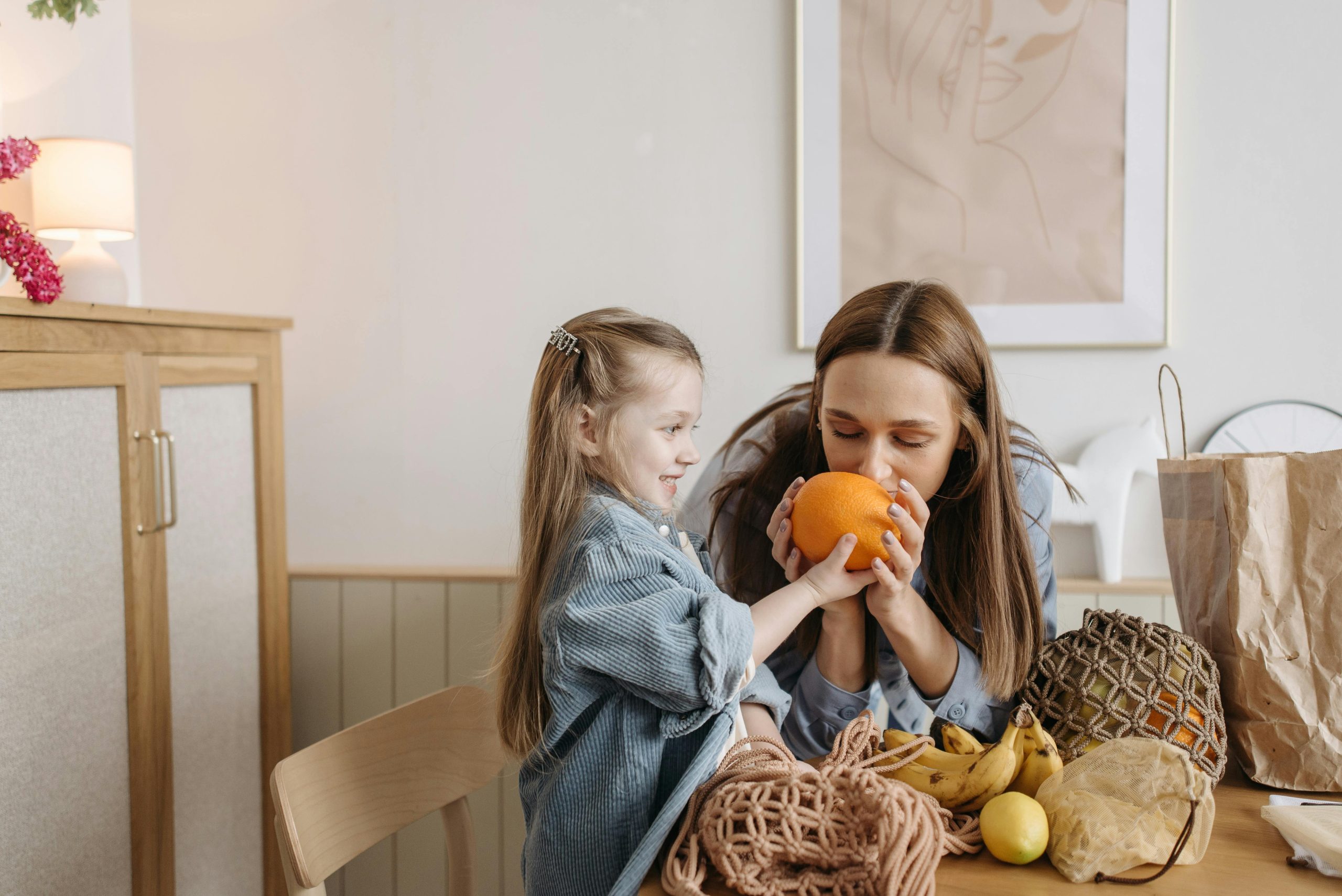
Connection builds safety and reduces resistance at meal times
Building connection and reducing pressure at the dinner table are some of the first strategies I give parents who want to see their children’s food intakes improve.
Many of us grew up with or may remember certain stressful dinner times, where we might have been heavily pressured to eat a certain food or finish the plate. And although this pressure may have stemmed from a well-intentioned desire for children to be healthy, the strategy often backfired. It’s just as true today as it was then: too much pressure provokes resistance in children and places their nervous systems in a ‘flight or fight’ state. This can limit a child’s ability even to digest new foods – much less try them.
So what does connection at mealtimes look like?
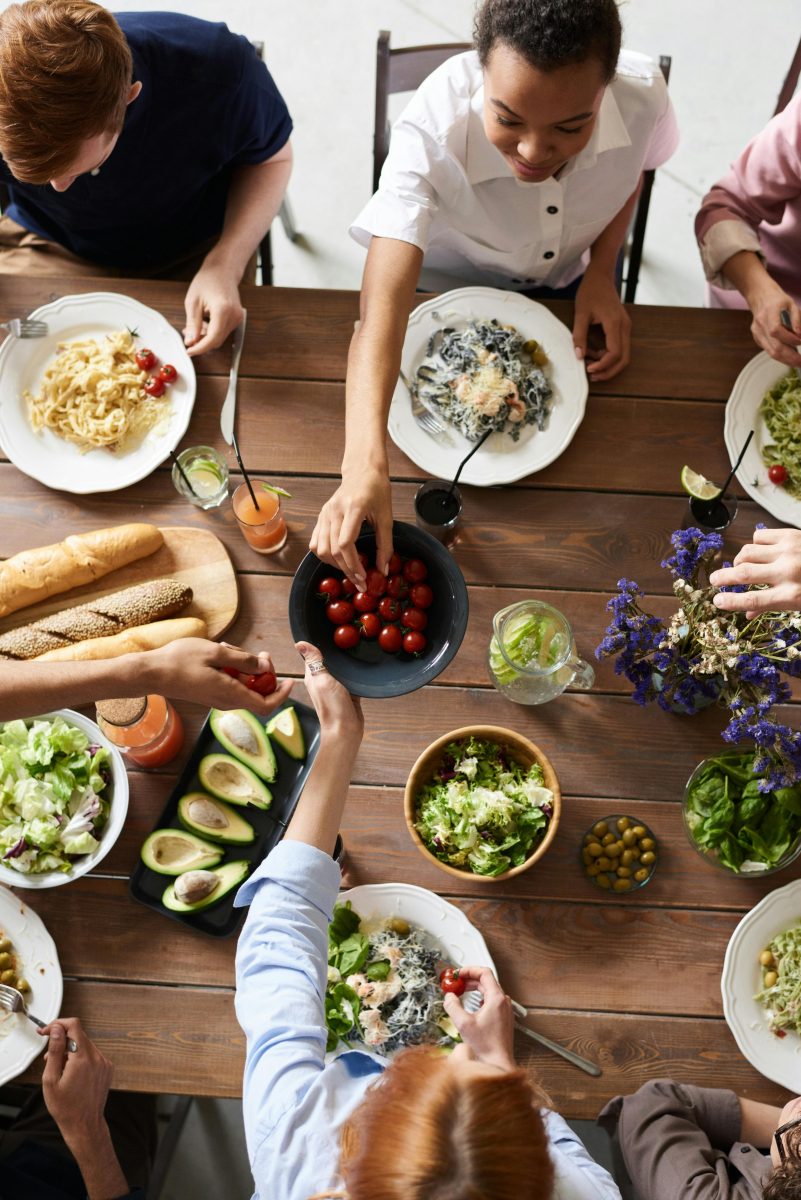
Mealtime connection will vary from family to family and may best be explored with a health professional. However, there are some simple ideas that anyone can try: playing asking each other trivia questions, playing “Guess the animal” or “Would you rather”, telling jokes, working through riddles, discussing everyone’s day, listening to music or an audio book, or simply chatting. This means the focus has moved away from the food itself to connecting with each other. It creates a supportive environment, where children will be relaxed enough to safely explore food.
What you may notice when you apply this principle at mealtimes is that frustration and stress start to dissipate, while joy and connection grow.
Having empathy for our children’s food journey and focusing on connection are foundations for building enjoyable meal times. In the next blog post I will focus more on practical strategies regarding what and how to serve meals.